


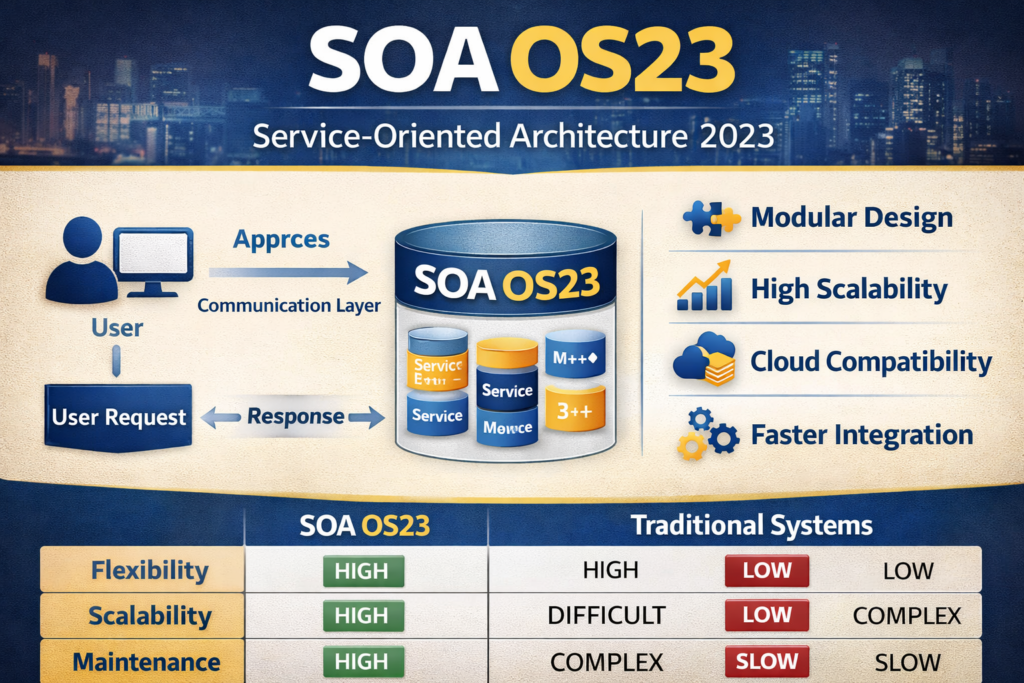
In the rapidly evolving digital and technology landscape, new systems and frameworks continue to emerge. One such term gaining attention is SOA OS23. Whether you are a tech enthusiast, developer, or business owner, understanding SOA OS23 can help you stay ahead in modern software architecture.
This guide explains what SOA OS23 is, its features, benefits, and how it is shaping the future of digital systems.
What is SOA OS23?
SOA OS23 refers to a modern evolution of Service-Oriented Architecture (SOA) integrated with advanced operating system capabilities and updated 2023 standards.
In simple terms:
- SOA (Service-Oriented Architecture) = A way to design software using independent services
- OS23 = Latest generation system improvements and protocols
Together, SOA OS23 represents a flexible, scalable, and efficient system architecture used in modern applications.
Read More:
Umrah taxi service Makkah to Madinah-MM umrah taxi services
Key Features of SOA OS23
SOA OS23 introduces several powerful features that make it stand out from traditional architectures.
1. Modular Design
Applications are divided into small services that can work independently.
2. High Scalability
Businesses can easily scale services based on demand without affecting the entire system.
3. Improved Security
Modern encryption and authentication methods are integrated.
4. Cloud Compatibility
SOA OS23 works seamlessly with cloud platforms and hybrid environments.
5. Faster Integration
Different systems and applications can connect easily through APIs.
How SOA OS23 Works
SOA OS23 operates by connecting multiple services through a communication layer.
Basic Workflow:
- User sends a request
- System identifies the required service
- Service processes the request
- Response is sent back to the user
Each service works independently, which increases performance and reliability.
Read More:
Private Umrah Taxi Service Makkah to Madinah for USA Pilgrims
Benefits of SOA OS23
Flexibility
Developers can update one service without affecting others.
Cost Efficiency
Reduces development and maintenance costs over time.
Faster Development
Teams can work on different services simultaneously.
Better Performance
Optimized system design improves speed and user experience.
Use Cases of SOA OS23
SOA OS23 is widely used across various industries.
1. E-Commerce Platforms
- Payment systems
- Inventory management
- User authentication
2. Banking Systems
- Secure transactions
- Data processing
- Customer services
3. Healthcare Applications
- Patient data management
- Appointment systems
- Telemedicine platforms
4. Enterprise Software
- CRM systems
- ERP solutions
- Business analytics
SOA OS23 vs Traditional Architecture
| Feature | SOA OS23 | Traditional Systems |
|---|---|---|
| Flexibility | High | Low |
| Scalability | Easy | Difficult |
| Maintenance | Simple | Complex |
| Integration | Fast | Slow |
Future of SOA OS23
The future of SOA OS23 looks very promising as businesses move toward:
- Microservices architecture
- Cloud-native applications
- AI-integrated systems
- Automation tools
It is expected that SOA OS23 will play a major role in next-generation software development.
Read more:
Book Umrah Taxi Online Saudi Arabia – Complete Guide for Pilgrims
Conclusion
SOA OS23 represents the next step in modern system architecture, combining flexibility, scalability, and performance. It is ideal for businesses and developers looking to build efficient and future-ready applications.
By understanding and implementing SOA OS23, organizations can improve productivity, reduce costs, and stay competitive in the digital world.