


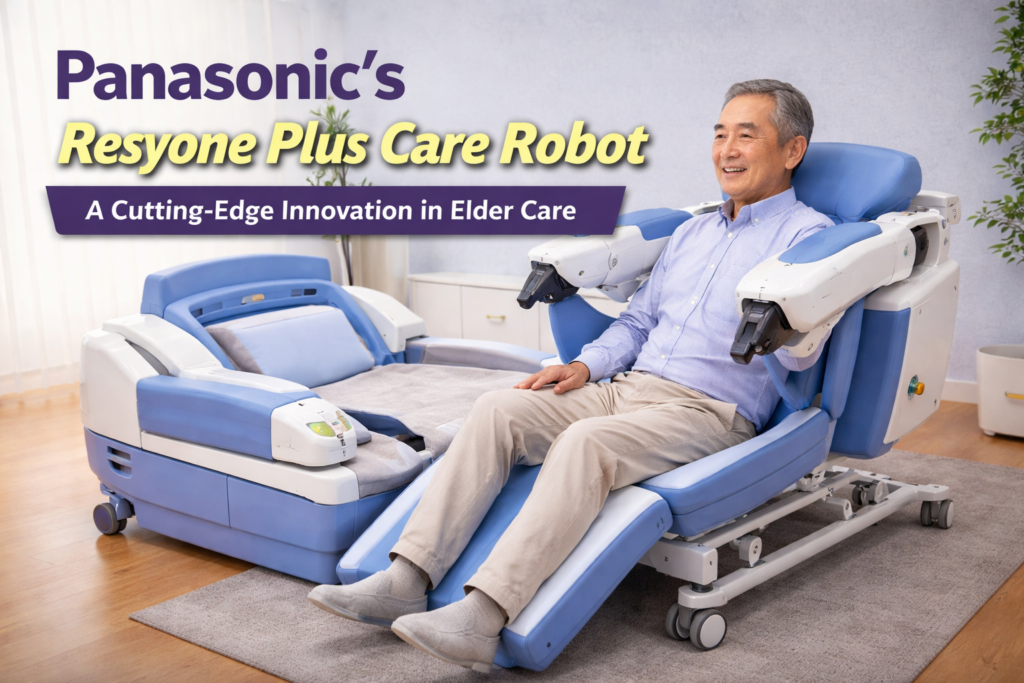
In today’s rapidly evolving healthcare industry, panasonic’s resyone plus care robot is transforming the way caregivers assist patients with mobility challenges. This innovative robotic solution is designed to reduce physical strain on caregivers while improving comfort and independence for patients, making it a game-changer in modern medical care.
What is Panasonic’s Resyone Plus Care Robot?
panasonic’s resyone plus care robot is an advanced robotic bed-chair system that easily converts from a bed into a wheelchair. This dual-function design eliminates the need for manual lifting, ensuring safer and more efficient patient transfers.
With panasonic’s resyone plus care robot, caregivers can simply adjust the system to transition patients smoothly, minimizing the risk of injury and enhancing overall care quality.
Key Features of Panasonic’s Resyone Plus Care Robot
One of the standout aspects of panasonic’s resyone plus care robot is its smart design and user-friendly operation. The system includes motorized controls, ergonomic support, and a seamless transformation mechanism.
Additionally, panasonic’s resyone plus care robot offers enhanced safety features such as secure locking systems and stable movement, ensuring patients remain safe during transfers and mobility.
Benefits for Caregivers
Caregivers often face physical strain due to lifting and repositioning patients, but panasonic’s resyone plus care robot significantly reduces this burden. By automating the transfer process, it helps prevent injuries and fatigue among healthcare workers.
Moreover, panasonic’s resyone plus care robot allows caregivers to focus more on patient interaction and emotional support rather than physically demanding tasks.
Advantages for Patients
Patients benefit greatly from panasonic’s resyone plus care robot, as it provides a more comfortable and dignified care experience. The smooth transition from bed to wheelchair reduces discomfort and anxiety.
Furthermore, panasonic’s resyone plus care robot promotes greater independence, allowing patients to move more freely with minimal assistance.
Applications in Healthcare Settings
From hospitals to nursing homes, panasonic’s resyone plus care robot is widely used in various healthcare environments. Its versatility makes it ideal for long-term care facilities, rehabilitation centers, and home healthcare setups.
Healthcare providers adopting panasonic’s resyone plus care robot are able to improve efficiency while maintaining high standards of patient care.
Why Panasonic’s Resyone Plus Care Robot Stands Out
Compared to traditional patient transfer methods, panasonic’s resyone plus care robot offers a technologically advanced solution that combines convenience, safety, and innovation. Its unique design sets it apart from other assistive devices in the market.
The reliability and engineering behind panasonic’s resyone plus care robot reflect Panasonic’s commitment to improving healthcare through smart technology.
Future of Care with Panasonic’s Resyone Plus Care Robot
As healthcare technology continues to advance, panasonic’s resyone plus care robot represents the future of patient mobility solutions. Its integration into healthcare systems highlights the growing importance of robotics in caregiving.
With increasing demand for efficient care solutions, panasonic’s resyone plus care robot is expected to play a vital role in shaping the future of healthcare worldwide.
Final Thoughts
In conclusion, panasonic’s resyone plus care robot is a groundbreaking innovation that enhances both patient care and caregiver efficiency. Its ability to combine functionality, safety, and comfort makes it an essential tool in modern healthcare.
If you are looking for a reliable and advanced patient care solution, panasonic’s resyone plus care robot is undoubtedly worth considering.