


Introduction
Hajj and Umrah are two of the most significant acts of worship in Islam, both involving a sacred journey to the holy city of Makkah and visits to Masjid al-Haram. While they share certain rituals and spiritual goals, they differ greatly in terms of obligation, timing, duration, and overall significance. Understanding these differences is essential for every Muslim who intends to perform either pilgrimage.
1. Obligation
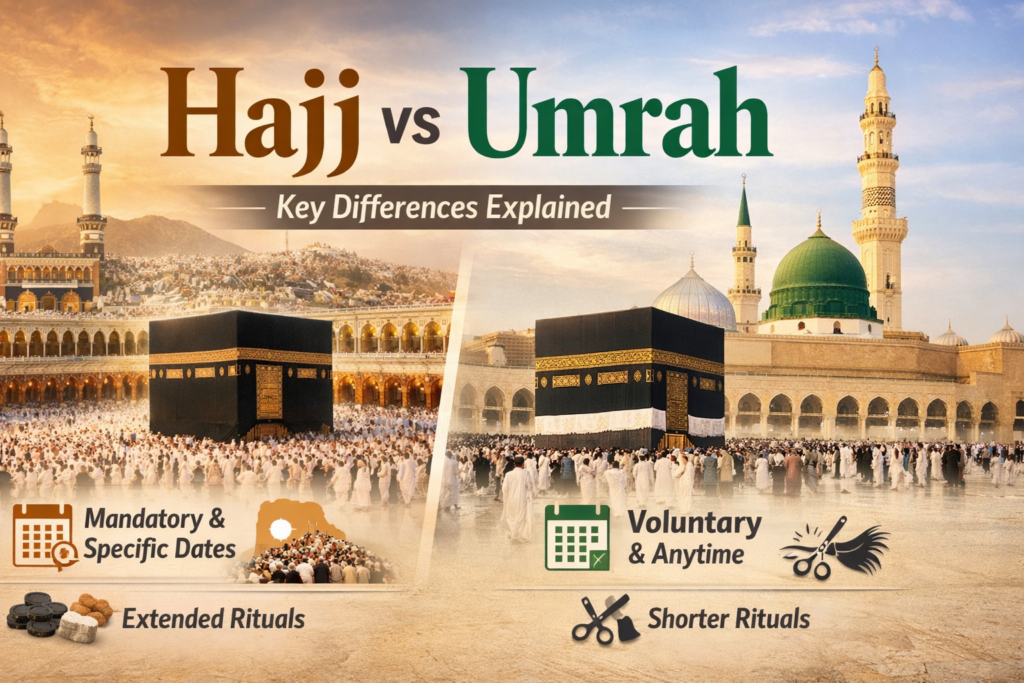
The most important distinction between Hajj and Umrah lies in their religious obligation.
Hajj is one of the Five Pillars of Islam and is mandatory for every Muslim who is physically and financially capable of performing it at least once in their lifetime. This obligation is clearly emphasized in Islamic teachings and holds immense importance.
Umrah, on the other hand, is not obligatory. It is a voluntary act of worship that Muslims can perform at any time to seek spiritual closeness to Allah. Although it is highly recommended, it does not carry the same level of obligation as Hajj.
2. Timing
Another major difference between Hajj and Umrah is the specific time when each pilgrimage can be performed.
Hajj can only be performed during specific days in the Islamic month of Dhu al-Hijjah, particularly from the 8th to the 13th. These dates are fixed and cannot be changed, which is why millions of Muslims gather during this limited period each year.
Umrah, in contrast, can be performed at any time of the year. This flexibility allows Muslims to plan their journey according to their convenience, making it more accessible for many people.
3. Duration
The time required to complete Hajj and Umrah also differs significantly.
Hajj typically takes about 5 to 6 days to complete, as it involves multiple rituals performed over several days and at different locations such as Mina, Muzdalifah, and Arafat.
Umrah is much shorter and can usually be completed within a few hours to 1–3 days, depending on the individual’s schedule and crowd conditions.
READ MORE:
Do You Have to Cut Your Hair for Umrah (Men)?
4. Rituals
The rituals performed during Hajj are more extensive and detailed compared to those of Umrah.
Hajj includes:
-
Ihram (state of purity)
-
Tawaf (circling the Kaaba)
-
Sa’i (walking between Safa and Marwah)
-
Standing at Arafat (a central pillar of Hajj)
-
Staying overnight in Muzdalifah
-
Stoning the Jamarat in Mina
-
Animal sacrifice (Qurbani)
-
Shaving or trimming hair
Umrah includes fewer rituals:
-
Entering the state of Ihram
-
Tawaf around the Kaaba
-
Sa’i between Safa and Marwah
-
Cutting or shaving hair
Because of these additional steps, Hajj is more physically and spiritually demanding.
5. Spiritual Reward and Significance
Both Hajj and Umrah carry great spiritual rewards and provide an opportunity for Muslims to seek forgiveness and strengthen their faith.
Hajj, however, holds a higher level of reward because it is an obligatory act and one of the core pillars of Islam. Completing Hajj sincerely is believed to cleanse a person of past sins.
Umrah also offers immense spiritual benefits and is often referred to as a means of spiritual renewal. Many Muslims perform Umrah multiple times in their lives due to its flexibility and accessibility.
6. Crowd and Experience
Hajj is one of the largest annual gatherings in the world, with millions of pilgrims traveling to Makkah at the same time. This creates a highly crowded environment that requires patience, discipline, and careful planning.
Umrah, being available throughout the year, usually involves smaller crowds (except during Ramadan), making it a more manageable and less physically demanding experience.
7. Cost and Planning
Hajj is generally more expensive due to its fixed schedule, high demand, and longer duration. It also requires more detailed planning and early booking through authorized agencies.
Umrah is relatively more affordable and flexible. Travelers can choose from a wide range of packages depending on their budget and preferences.
READ MORE:
How to Choose the Best Umrah Packages from USA – Complete Guide
Conclusion
While both Hajj and Umrah involve visiting the holy sites in Makkah and performing acts such as Tawaf and Sa’i, they differ significantly in purpose, obligation, timing, and rituals. Hajj is a once-in-a-lifetime obligation for eligible Muslims and includes a comprehensive set of rituals performed during specific dates. Umrah, on the other hand, is a voluntary pilgrimage that can be performed at any time and involves fewer rituals.
Understanding these differences helps Muslims plan their spiritual journey more effectively and perform each pilgrimage with proper knowledge and intention.